Our Work • STEM Education

Hands-On STEM, Robotics & Coding.Future-Ready Minds.

From first circuits and moving models to coding, robotics, Arduino and automation, our programmes help government-school and underserved learners build, test, improve and confidently explain what they create.

ExploreBuildTestImproveInnovate
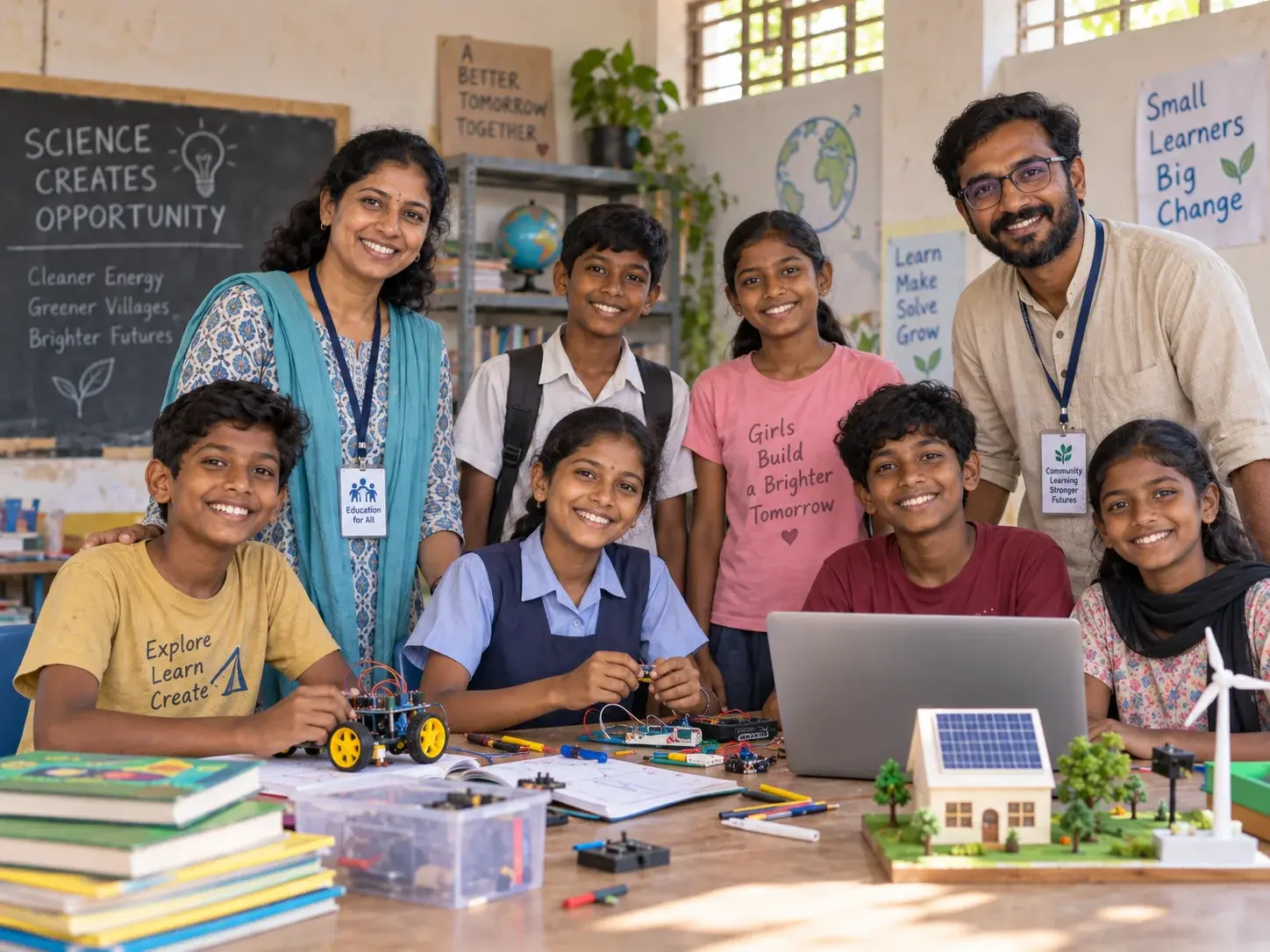
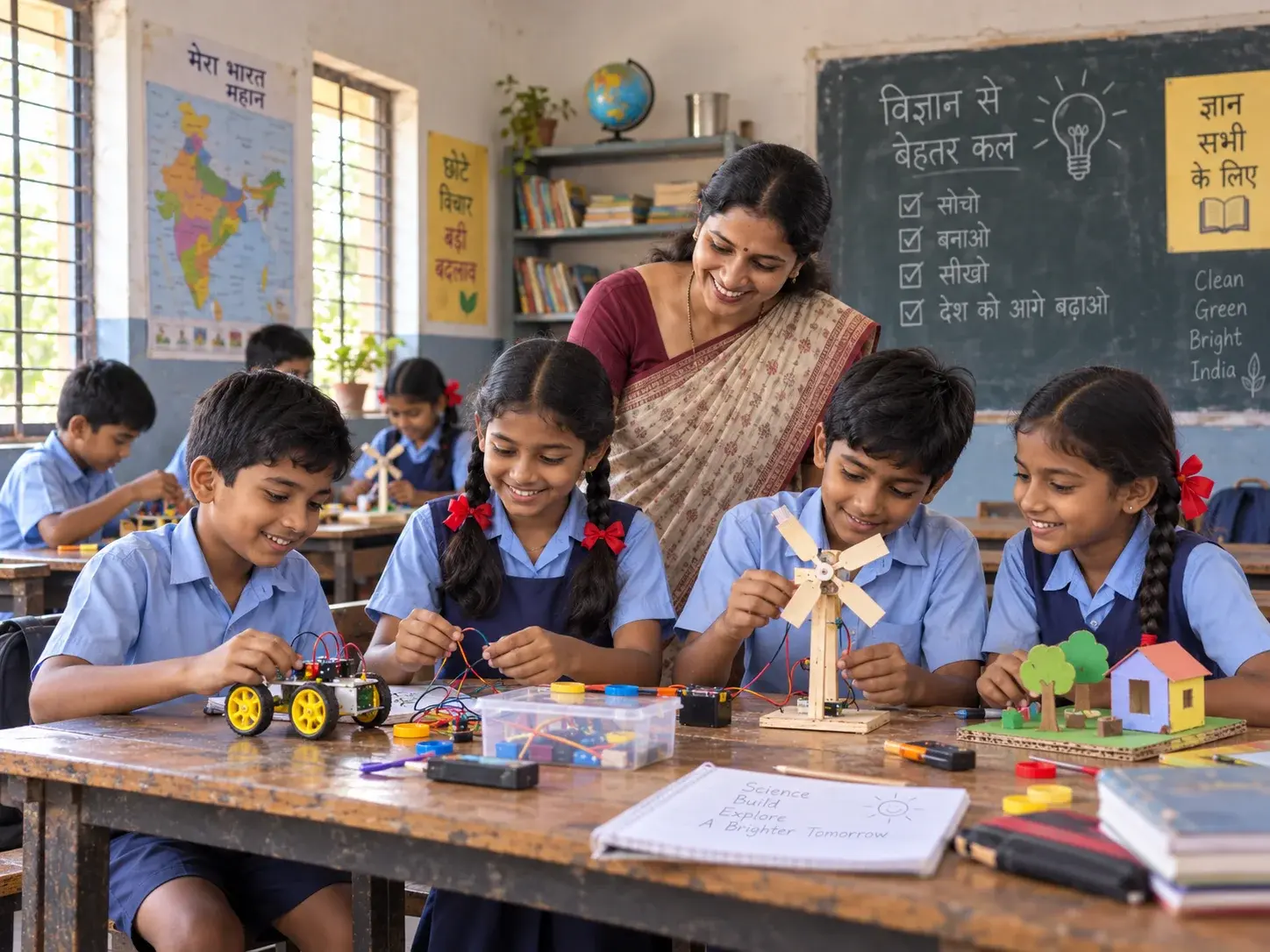
Students building a hands-on STEM project
Students participating in a government-school STEM activity
Practical by designBuilt for real-world delivery

Government-school experience • MCD schools & Vidyanjali engagement

See documented reach and impact →

Why Hands-On STEM

Understanding Grows When Children Build, Code and Test.

A circuit makes electricity visible. Robotics, coding and moving models turn abstract ideas into things a child can test. Structured practical learning creates space for questions, teamwork and confident explanations.

Grade-appropriate activities, reusable kits, trained facilitation and teacher orientation connect classroom concepts to purposeful STEM, robotics and coding projects. For older learners focused on responsible technology use and employability, explore our AI literacy and digital-skills programmes.

Our Programme Portfolio

A Pathway for Every Stage of Curiosity.

Two progressive age-based pathways, with a focused initiative to widen girls’ participation.

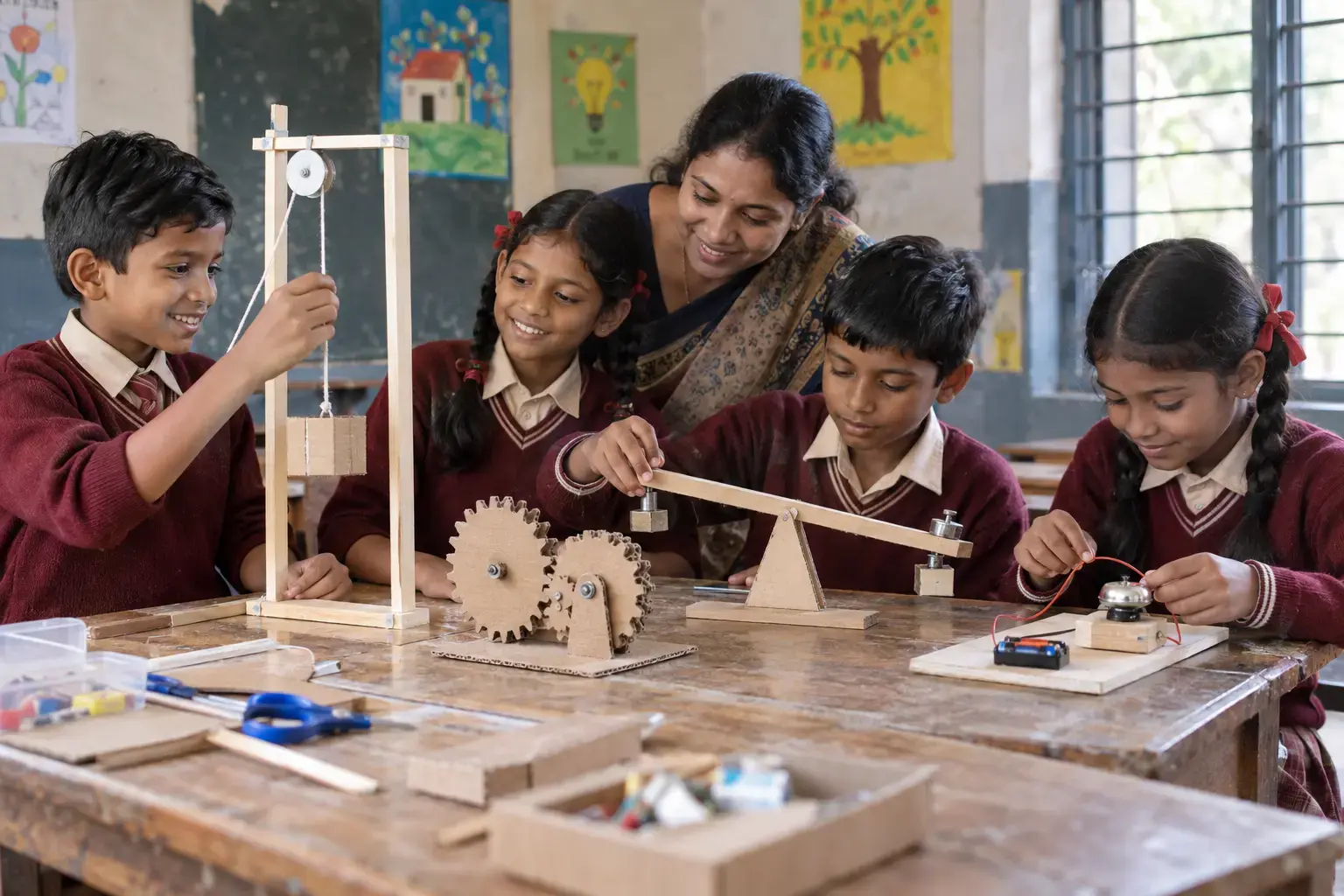
Grades 3–5 Indian government-school students exploring pulleys, gears and a simple electric doorbell
Grades 3–5

Nanhe Engineers

Curiosity Begins When Children Build

A foundational pathway that develops curiosity, fine-motor engagement, logical thinking and confidence through approachable science and engineering activities.

MagnetismElectricityPaper CircuitsMechanicsBlock CodingEngineering Activities

Practical outputs: Paper circuits, electric doorbells, pulleys, levers, cardboard gears, moving models and beginner coding projects.

→Intended outcomes: curiosity, fine-motor development, logical thinking, teamwork and confidence in explaining a creation.
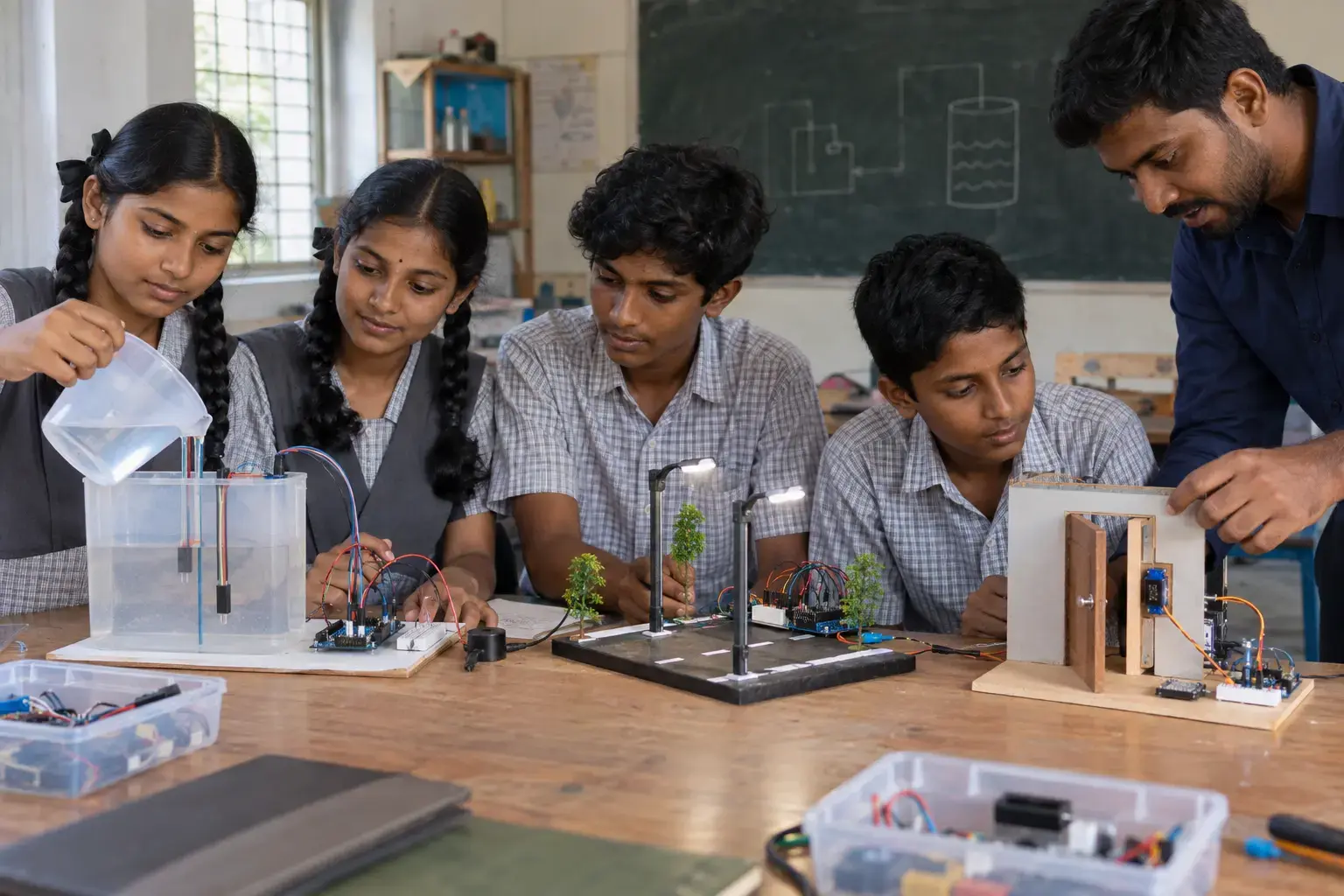
Older Indian students building water-level, smart-lighting and servo automation projects
Grade 6 onwards

Yuva Innovators

From Learning Technology to Creating With It

A progressive pathway that introduces electronics, Arduino, sensors, programming, mechanics and automation through structured project-based learning.

ElectronicsArduinoSensorsCodingMechanicsAutomationPhysical ComputingIoT conceptsProject documentation

Practical outputs: Smart street lights, water-level alarms, automated gates, environment monitors, smart-room systems and sensor-based safety devices.

→Foundation → Build → Innovate → Present: develop technical confidence, computational thinking, collaboration, debugging and presentation skills through age-appropriate challenges.
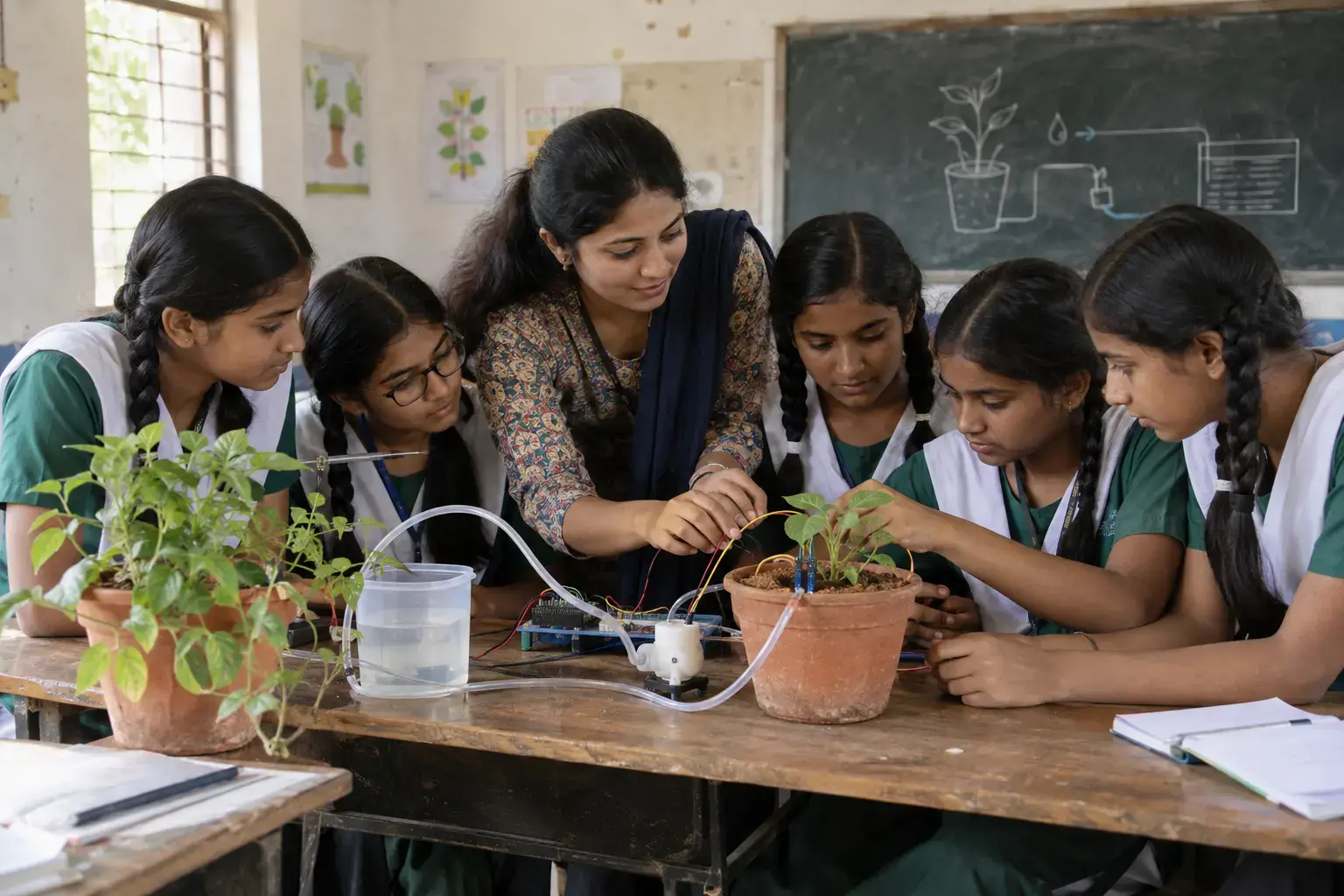
Indian schoolgirls building a soil-moisture sensing and automatic plant-watering project
Focused initiative • Available for partnership

STEM Shakti

Girls Creating the Future

A girls-focused initiative designed to run across the Nanhe Engineers and Yuva Innovators pathways, with supportive learning environments and visible opportunities to lead.

Girls’ STEM clubsElectronics & codingWomen-in-technology interactionsPeer mentoringLeadershipSTEM career awareness

Practical outputs: Collaborative challenges, student-led demonstrations and project exhibitions. Companies can contribute through sponsorship, women mentors, employee volunteering and project reviews.

→Designed to build participation, technical confidence and leadership. Cohort outcomes will be documented following delivery.

One Learning Journey

Explore. Build. Test. Improve. Explain.

  1. 01

    Explore

    Observe a phenomenon, mechanism or problem and ask what is happening.

  2. 02

    Build

    Use materials, kits and components to make the concept tangible.

  3. 03

    Test

    Try the model, circuit or code and notice what works and what does not.

  4. 04

    Improve

    Adjust, debug, rebuild and learn from mistakes instead of hiding them.

  5. 05

    Explain

    Present the project, articulate the idea and build confidence through demonstration.

Young Innovators Showcase

Where Projects Become Confidence.

Students explain what they built, demonstrate how it works and share what they learned. Exhibition-based learning has formed part of our MCD school work; future showcases can be shaped around each programme.

  1. 01

    Build

    Develop working projects through guided activities and team challenges.

  2. 02

    Demonstrate

    Test and present circuits, moving models, robotics or automation projects.

  3. 03

    Explain

    Communicate the problem, process and learning to peers, teachers and visitors.

Small Ideas. Visible Possibilities.

Showcase themes can include clean energy, smart schools, circuits, moving models and community problem-solving. Partners can join as mentors and project reviewers.

Experience on the Ground

Designed for Real School Environments.

Our MCD primary-school work connects mechanics, paper circuits and beginner coding with project demonstrations. Vidyanjali engagement has included electronics, Arduino and sensors.

Activities are adapted to student age, infrastructure and group size. Detailed evidence and institutional stories sit together on Our Impact.

For Technology Companies & CSR Teams

What Your Partnership Can Enable.

What your partnership can enable

  • Nanhe Engineers or Yuva Innovators school programmes
  • STEM Shakti girls’ cohorts and women mentors
  • Reusable STEM, electronics and robotics kits
  • Teacher orientation and classroom continuity
  • Student exhibitions and innovation challenges
  • Multi-school and community STEM initiatives

Reporting agreed for each programme

  • Defined scope and structured session plan
  • Participation and attendance records
  • Photographic and project evidence, with appropriate consent
  • Student learning and showcase outputs
  • Programme summary and agreed utilisation reporting

Bring Hands-On STEM to More Classrooms

Partner With Us to Build Future-Ready Learners.

CSR and institutional partners can support classroom programs, STEM kits, teacher enablement, learning spaces or multi-school initiatives.